Praying Mantises
Stagmomantis sp.
Observed in a Southern California garden

What are we looking at?
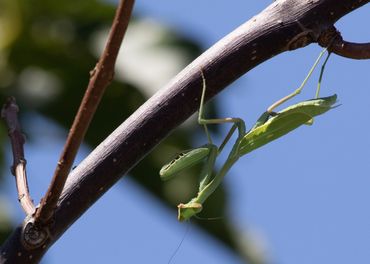
These mantises are consistent with the genius Stagmomantis. The leading species candidate is the bordered mantis, Stagmomantis limbata, but the similar California mantis also occurs in this region. The photographs don't yet show enough diagnostic features to confirm the species.

Built to Hunt
Praying mantises are ambush predators. They can remain nearly motionless while watching for prey, then strike with specialized front legs lined with spines that help seize and hold their catch.

Green, Brown— or Somewhere Between
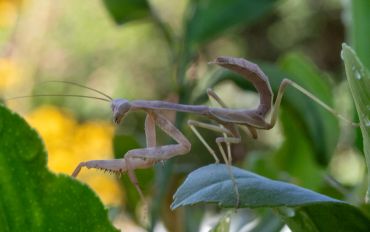
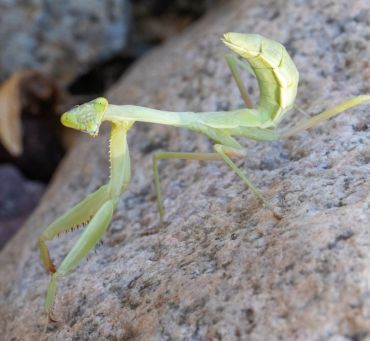
Praying mantises can appear in shades of green, brown, or tan. Color alone isn't enough to identify a species, and individuals of the same species may look surprisingly different. Both green and brown mantises have been photographed in the garden.

A Generalist Predator
Mantises are generalist predators and may capture both pest and beneficial insects. They hunt whatever suitable prey they can capture, including flies, moths, bees and other insects. This photograph documents a mantis feeding on a bee in the garden.
Life in the Garden
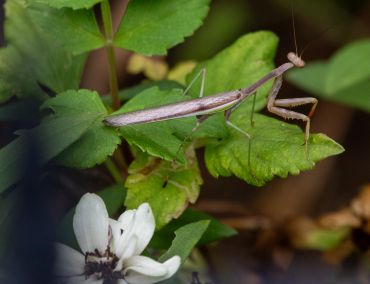
Mantises spend much of their time among vegetation — resting on stems and leaves, moving through plants , and waiting for prey to come within reach.
Their surroundings are more than a backdrop. The garden provides places to hunt, hide, reproduce, and complete their life cycle.
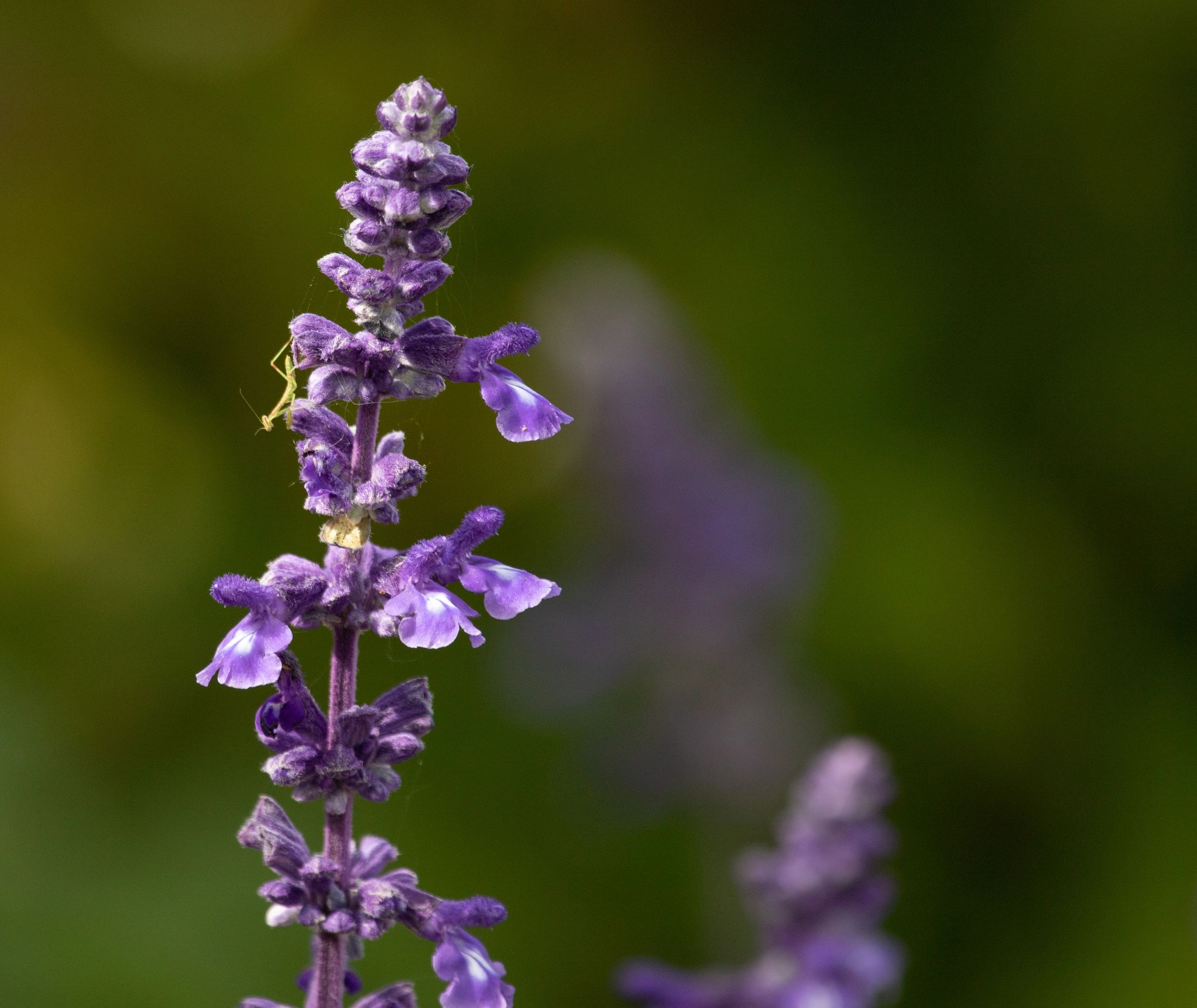

Starting Small
Young mantises, called nymphs, hatch looking much like miniature versions of the adults— but without fully developed wings. As they grow, they shed their exoskeleton repeatedly, becoming larger with each molt.
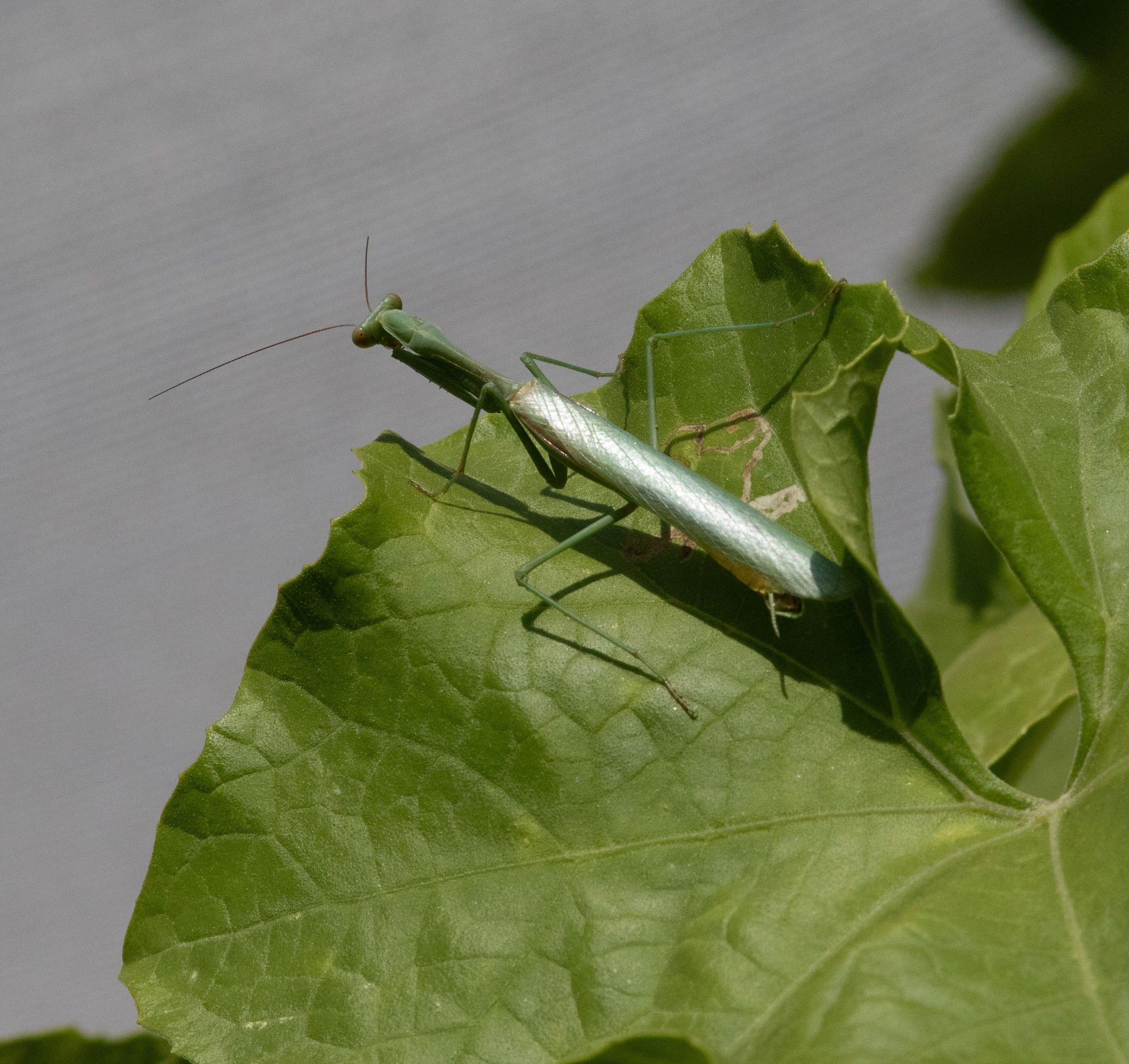
Growing into an Adult
As a mantis grows, each molt brings it closer to its adult form. Developing wing pads during the later nymphal stages, with fully developed wings appearing in the adult stage.
When Mantises Meet
Mantises are generally solitary, but their paths sometimes cross. Encounters between individuals can involve anything from brief tolerance to defensive behavior, competition, or mating —so a photograph alone doesn't always tell us exactly what is happening.
More Than a Predator

A praying mantis is only one participant in a larger garden community. The same plants that provide hunting grounds for mantises may also support bees, butterflies, flies, beetles, and other insects.
Watching these relationships unfold is a reminder that the garden isn't simply divided into "pests" and "beneficials." It is a living system of predators, prey, pollinaters, plants, and countless other organisms interacting with one another.
From The Garden